
 Free Shipping in US

Under Desk Foot Rest Benefits: Why Your Feet Matter for a Pain-Free Workday
Quick answer: A foot rest gives your feet a stable, slightly raised surface when they don’t rest flat on the floor. It helps keep your knees around hip level, takes pressure off the backs of your thighs and supports a more neutral lower back while you sit.
Most ergonomic advice starts with the chair and the screen, but your feet are the foundation of your sitting posture. If they dangle, tuck under the chair or rest on tiptoe, your hips, lower back and legs compensate all day long. An under desk foot rest is one of the simplest and least expensive fixes.
When do you need a foot rest?
OSHA’s computer workstation guidance says your feet should be fully supported, flat on the floor or on a footrest, and recommends a footrest when the chair is raised high enough that your feet can’t reach the floor. Mayo Clinic’s office ergonomics guide also advises using a footrest if your feet don’t rest comfortably on the floor.
You probably need one if:
- Your desk is fixed height and you raised your chair to reach it
- You’re shorter than average and your feet don’t reach the floor
- You often cross your legs, tuck your feet under the chair or sit on one leg
- The backs of your thighs feel pressure from the seat edge
- Your lower back or hips feel tired by the end of the day
5 benefits of an under desk foot rest
- Better posture. Supported feet help your pelvis sit neutrally, so you’re less likely to slump.
- Less pressure on the lower back and hips. A stable base reduces the strain of holding your legs in an awkward position.
- Less pressure under the thighs. When feet dangle, the seat edge presses into the back of your legs. Raising the feet relieves that.
- More movement. A rocker-style foot rest lets you gently move your feet and ankles, which keeps you from sitting completely still for hours.
- More comfort than a box or plastic stand. A memory foam surface is softer on the feet than a hard plastic footrest.
What to look for
- Adjustable height, so you can match it to your chair and desk
- Memory foam that’s supportive but comfortable
- A non-slip base that stays put on hard floors and carpet
- A washable, removable cover
- Enough surface area for both feet to shift positions; the ComfiLife Foot Rest measures 17.5 × 12 × 6 in
How to set the right height
- Adjust your chair so your elbows are about level with the desk.
- Slide the foot rest under the desk where your feet naturally fall.
- Adjust the height until your knees are about level with or slightly below your hips and your thighs are roughly parallel to the floor.
- Your feet should rest flat with no pressure behind the knees.
More than an office accessory
The ComfiLife Foot Rest is light (about 1 lb) and portable. Use it at your desk, on the couch, or on a plane. Flip it over for a gentle rocking motion, or place it under your knees when lying down for extra comfort.
Pair it with lumbar support
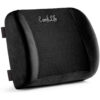
Feet and lower back work together. Combine the foot rest with a Lumbar Support Back Pillow for a complete ergonomic seat (see our lumbar support pillow guide), and an anti-fatigue mat if you switch to a standing desk.
Shop the foot rest: ComfiLife Foot Rest in Black, Gray or Navy Blue.
Frequently asked questions
Are foot rests good for your back?
When your feet can’t rest flat on the floor, a foot rest supports a more neutral sitting posture, which can reduce strain on the lower back.
How high should an under desk foot rest be?
High enough that your knees sit about level with your hips and your feet rest flat without pressure behind the knees.
Do tall people need a foot rest?
Usually not if their feet already rest flat on the floor. Foot rests matter most when the chair is raised or the person is shorter.
Can I use a foot rest for sciatica?
Many people find that better foot placement eases pressure on the lower back and hips. Ask your doctor about sciatica treatment.
Can I use a foot rest at home or while traveling?
Yes. A lightweight memory foam foot rest works under a desk, in front of the couch or on a plane.
Sources
This article is for general information only and is not medical advice. Consult your physician about back or leg pain.


Add comment
You must be logged in to post a comment.