
 Free Shipping in US

Knee Pillow for Side Sleepers: How a Small Pillow Supports Your Hips and Lower Back
Quick answer: A knee pillow sits between your knees while you sleep on your side. It keeps your top leg from dropping forward, so your hips, pelvis and spine stay in a more neutral line. That can ease pressure on the lower back, hips and knees overnight.
Side sleeping is the most common sleep position, but it has a weak spot: when your top leg slides forward and down, it pulls your pelvis and twists your lower spine. Hold that position for seven or eight hours and you may wake up stiff or sore. A knee pillow is a simple way to keep everything lined up.
Why experts recommend a pillow between the knees
Mayo Clinic’s guide to sleeping positions that reduce back pain recommends that side sleepers draw their legs up slightly and place a pillow between the knees. Cleveland Clinic gives similar advice: if you sleep on your side, a pillow between the knees helps keep your hips, pelvis and spine aligned.
A regular bed pillow works, but it tends to flatten, slip out or be too bulky. A contoured knee pillow is designed for the job.
Who can benefit from a knee pillow
- Side sleepers who wake up with lower back or hip stiffness
- People with sciatica-related discomfort at night, since better alignment can reduce pressure on the lower back
- Pregnant women, who are often advised to sleep on their side as pregnancy progresses
- People with hip or knee joint discomfort, where the knees press together
- Anyone recovering from long days of sitting or standing who wants better sleep posture
What to look for in a knee pillow
- An ergonomic contour that fits between the thighs and knees and stays in place
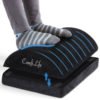
- High-density memory foam that keeps its shape and doesn’t go flat. The ComfiLife Knee Pillow uses 100% premium high-density cut memory foam
- A cooling cover for hot sleepers
- A compact size (about 9.8 × 7.9 × 6.3 in) so it moves with you during the night
- A washable cover
How to use a knee pillow
- Lie on your side with your knees slightly bent.
- Place the pillow between your knees, with the wider end toward your thighs.
- Keep your head pillow at a height that keeps your neck in line with your spine.
- Give it a few nights. Like any new sleep setup, it can take a few days to get used to.
Tip for back sleepers: If you sleep on your back, Mayo Clinic suggests placing a pillow under your knees instead to help keep the natural curve of your lower back. A bolster pillow works well for this.
Complete your sleep setup
If you also deal with lower back pain while sitting, read our guide to the lumbar support pillow for office chairs. For lower back support in bed, try the Lumbar Support Pillow for Sleeping.
Shop the pillow: ComfiLife Orthopedic Cooling Knee Pillow
Frequently asked questions
Is it good to sleep with a pillow between your knees?
For side sleepers, yes. It keeps the top leg from pulling the pelvis and lower spine out of line, which Mayo Clinic and Cleveland Clinic both recommend.
Does a knee pillow help with sciatica?
Many people find that better hip and spine alignment reduces pressure on the lower back at night. It may not work for every condition, so talk to your doctor about sciatica.
Can I use a knee pillow during pregnancy?
Yes. Many pregnant women use a knee pillow for more comfortable side sleeping. Check with your healthcare provider about your sleep position.
How long does it take to get used to a knee pillow?
Usually a few nights.
Does a memory foam knee pillow go flat?
A high-density memory foam pillow is designed to keep its shape much longer than a regular bed pillow.
Sources
- Mayo Clinic: Sleeping positions that reduce back pain
- Cleveland Clinic: Is your sleep position causing back pain?
This article is for general information only and is not medical advice. Consult your physician about back, hip or sciatic pain, and your healthcare provider during pregnancy.

Add comment
You must be logged in to post a comment.